My story with communities and my view about how healthy tech communities should work.
Let’s start with the definition of community:
“A community is a social unit with a shared socially significant characteristic, such as place, set of norms, culture, religion, values, customs, or identity. Communities may share a sense of place situated in a given geographical area or in virtual space through communication platforms.”
I started joining communities since around 2006, starting with videogame forums on the (in)famous forumcommunity, then TeamSpeak and most recently on Discord, I even moderated some of these in time, especially around eSports.
Aside from gaming communities I have always been involved in discussion groups and social media revolving around music, yep I’m staring at you MySpace!
After leaving my eSports and music dreams behind (oh well, not completely), I started working in IT more than 8 years ago and before moving abroad — I’m originally from Italy and currently live in the Netherlands — I’ve never been much involved in tech communities.
Why? Ok, let’s make a list.
- I have always been an introvert and I did not like to mix my private life — everything that happened after 5 PM — and my professional life — everything that went on from 9 AM until I clocked out;
- I was just using Open Source software but never joined a community with the intent of interacting or contributing;
- Italian dev communities I knew were mostly online and I was not really fond of the whole “let’s meet some strangers working in your same field” idea;
- I had a stable job, no network needed so I just forgot about it; Everything started to change when I decided to leave my corporate job in Italy and started planning out my switch to a freelancing career.
I needed to build a network and so I began publishing more content on LinkedIn (well, I actually had to update my profile before that) and created some form of personal branding — mostly around memes and publicly blasting toxic entrepreneurs and companies — the results were quite good and so I went on.
In the meantime I was also getting passionated about my job, in particular around everything DevOps and Kubernetes. In 2019, I attended my first tech conference ever: Codemotion Milan in 2019. I enjoyed the talks, the vibe and the format of it all. Remember this, it will come in handy later.
It is now 2020, the pandemic hit and my introversion started shying away. I started craving staying in touch with people and talking about tech stuff. To fulfill my desires, I joined some apps to get to know more freelance professionals and expand my network.
I created a community for freelancers, started streaming on Twitch.tv — in a way it was a little podcast, very nice and cozy — and that community grew in a spontaneous and organic way, driven by comradery, mutual help and a healthy desire of sharing.
So what? Well, after the various lock-downs expired, I started digital nomading across Europe for a while, had amazing experiences in co-workings and co-livings, explored different cultures, different countries and met a lot of cool people.
I then moved to the Netherlands — read this blog, it is nice. Since moving here I started going down the community rabbit hole, more and more, starting with attending my first ever KCD, various meetups in the Cloud Native space and then ending up being in the organizing team for KCD in the Netherlands, Dutch Kubernetes Meetups and for KubeTrain. All of this on top of attending (sometimes as a speaker) most of the local meetups in my city and various conferences, including Cloud Native Rejekts, KubeCon and DevOpsDays Amsterdam, of course.
My experience in the community is also going hand in hand with my open source journey. Just to mention the latest one, I’m currently part of the Kubernetes Release Team for v1.31, I have written a blog for the CNCF, updated Kong Ingress Controller docs, contributed to PrivateGPT and the list goes on.
So you got the drill by now, I am deep in the tech community world and I fell in love with open source and its communities. The initial idea behind this blog was more like a bullet point list about how tech communities should work in my opinion and, after a long introduction (sorry, I love giving context), this is it!
Warning: this list is opinionated, a result of my own community experience and how I personally see communities.
Be open at all costs
Rule number one, that I will borrow from punk rock: no room for rockstars.
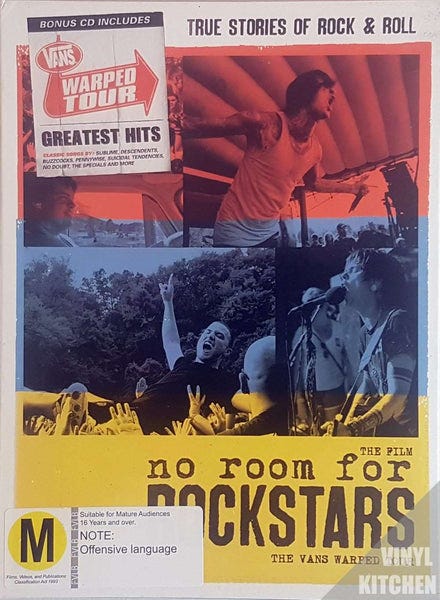
A community exists only because a lot of people have traits in common, there is no need for pack leaders (moderators are welcome though) and gatekeeping is not allowed, exactly like in a punk concert.
p.s. This also applies to open-source-ness. A tech community around closed-source software (unless it’s a videogame) sucks hard and it’s nothing but an artificial cage built to inject marketing and sales pitches in it. Sorry, but this is the harsh truth behind your closed-source community.
Be nice to everyone or stay out.
Code of conduct, house rules, frieNDA, call if however you like but it summarizes with: be nice or stay out. Community means helping each other, lifting each other up and having each others’ back.
There is no space for bullies or ass*oles alike.
Don’t treat your community like an on-off switch
This is me thinking about certain events, certain companies and certain groups. A community exists with or without a company or a foundation behind it, so, if structured entities want to benefit from a community in exchange for sponsorships, endorsement or anything else, they are more than welcome to be part of it. They just have to keep in mind that the community is not theirs, at all. A community has no owner and it is very quick to turn away from non-ideal partners.
Let organizers have agency
I will never stress this enough. It is more than fine to set some guardrails and give guidance but communities are spontaneous, they self organize, they find ways, they know what works locally. Decentralization is the way, centralizing kills the purpose.
This also means that community organizers and moderators should put their big ass ego to the side and just work for the community they want to contribute building.
People and diversity > process
This is very simple, yet crucial. It is all about the people that make your community thrive and prosper, there is no age limit or any other kind of limit. Every tech community should be able to embrace and welcome diversity, for real.
Give people a space, pizza, drinks, a microphone and optionally a screen… They will make it happen. Don’t make it too difficult, don’t add complexity to it.
Sponsorships are a double edged sword.
Sponsors. They are rightfully part of the community and they can benefit from it, may that be direct or indirect profit, brand awareness, visibility, hiring... Not arguing about that, it all makes sense. Just don’t be SO sales-y, be less obvious about it and have that human touch. It makes a world of difference between you and your competitors.
Don’t spam your webinar too much, just make it a recurring appointment with interesting guests so people will join fondly and it will create a space of pure interaction, for example. There are plenty of ways to create healthy tech communities, backed by sponsors.
Oh and please, also have socks at your booths and have them ready to distribute at events.
Late disclaimer: opinions are my own, duh.
That’s all for now, from your favorite Cloud Native Avocado🥑 Find all my links 👉 here.
See you around, ciao!
Originally published on blog.mb-consulting.dev